Dealing with Golfer’s Elbow? Here’s How Physiotherapy Can Help
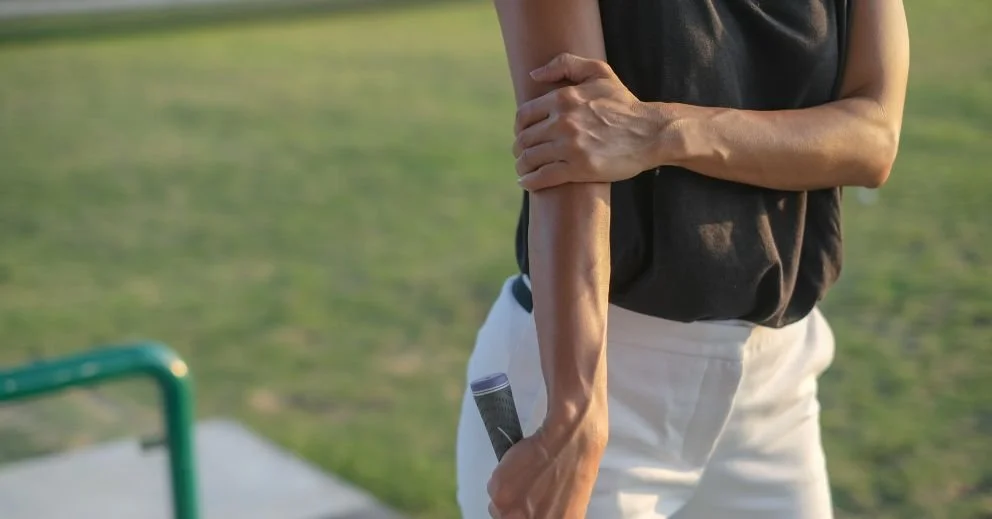
Golfer’s elbow (also known as medial epicondylitis) is a common condition that causes pain on the inside of the elbow. Despite its name, you don’t need to play golf to experience it. People who regularly lift weights, work with tools, carry children, or perform gripping and repetitive wrist movements are often affected too.
Physiotherapy is one of the most effective ways to treat golfer’s elbow because it focuses on reducing pain, improving movement, rebuilding strength, and addressing the cause of the irritation rather than just the symptoms.
Summary: Golfer’s elbow happens when the tendons on the inside of the elbow become irritated from overuse, gripping, or repetitive strain. Physiotherapy helps by improving movement, reducing pain, and rebuilding tendon strength through a mix of manual therapy, targeted exercises, taping, and education. With a structured treatment plan, most people can return to normal activities while reducing the risk of reinjury.
What Is Golfer’s Elbow?
Golfer’s elbow is a form of tendon irritation affecting the flexor and pronator muscles found in the forearm. These muscles attach to a small bony area on the inside of the elbow. When overloaded, those tendons can become irritated, stiff, or painful, especially during gripping or twisting movements.
Common symptoms include:
Aching pain on the inside of the elbow
Stiffness or tenderness through the forearm
Pain when gripping objects
Weakness during lifting or wrist movements
Discomfort when performing pushing exercises or throwing motions
What Causes Golfer’s Elbow?
The most common cause is repetitive strain. This can happen from:
Weight training with poor wrist or elbow mechanics
Repeated gripping, twisting, or squeezing
Racquet sports like tennis, squash, or pickleball
Golf (especially with high swing volume or poor technique)
Repeated lifting, carrying, or manual work
Poor shoulder stability, weak grip strength, reduced mobility, and technique issues can also increase the load placed on the elbow tendons.
How Physiotherapy Helps Treat Golfer’s Elbow
Physiotherapy is a highly effective treatment because it focuses on restoring tendon health and improving how the arm functions overall.
Here’s how treatment typically helps:
Pain Relief and Inflammation Reduction
Hands‑on treatment, soft tissue work, dry needling, and taping may be used early to decrease pain and relax irritated tissue. This makes movement more comfortable and prepares the tendon for strengthening work.
Manual Therapy to Improve Mobility
Your physiotherapist may use joint mobilisation, soft tissue release, or trigger point therapy to relieve muscle tension and improve movement through the elbow, wrist, and forearm.
Strengthening the Tendons Safely
Progressive loading is key for tendon healing. Your physio will guide you through exercises that may include:
Isometric holds to reduce pain
Eccentric loading (slow lengthening movements)
Functional strengthening such as grip training or wrist control
These help rebuild tendon resilience and prevent future flare‑ups.
Correcting Contributing Factors
Pain at the elbow can often be linked to:
Shoulder weakness
Poor grip control
Reduced thoracic or wrist mobility
Poor lifting or sports technique
Your brisbane physiotherapist will assess more than just the elbow to address the full movement chain.
Example Physiotherapy Exercises for Golfer’s Elbow
Here are a few exercises that may be included in a rehab plan. Always consult a qualified physio before starting if you’re unsure.
Isometric Wrist Flexion Hold
Place your forearm on a table with your palm facing up. Gently resist your hand with your other hand without letting it move. Hold for 10–15 seconds.
Eccentric Wrist Flexion
Using a small dumbbell, lift with both hands, then slowly lower using only the affected arm. Repeat 10 times.
Grip Strengthening
Use a stress ball or grip trainer to build control and strength gradually.
Forearm Stretch
Extend your arm with palm facing up and gently pull fingers downward to stretch the forearm flexors.
How Long Does Recovery Take?
Every case is different, but many people begin noticing improvement within 2–4 weeks, with full recovery often taking 6–12 weeks, depending on severity and tendon response.
Consistency is key. Physiotherapy works best when exercises and lifestyle changes are followed through regularly.
When to See a Physiotherapist
It’s a good idea to seek help if:
The pain persists longer than 2–3 weeks
Grip strength is getting worse
Training, lifting, or daily tasks are becoming painful
You’ve tried resting but symptoms return once activity resumes
Early intervention helps prevent long‑term tendon issues and speeds up recovery.
Ready to Get Rid of Golfer’s Elbow Pain?
If elbow pain is stopping you from training, working, or enjoying life, you don’t have to push through it. The team at Elite Health & Performance can assess what’s driving your symptoms and build a treatment plan tailored to you.
Book an appointment today and take the next step toward comfortable, confident movement again.
Key Takeaways
Golfer’s elbow is caused by irritation of the tendons on the inside of the elbow.
Physiotherapy treats the root cause by reducing pain, improving movement, and rebuilding tendon strength.
Early treatment and progressive loading exercises prevent long-term issues and help restore confidence in movement.
FAQ
Is golfer’s elbow the same as tennis elbow?
No. Tennis elbow affects the outer elbow, while golfer’s elbow affects the inside.
Can I keep training with golfer’s elbow?
Some modified movement may be safe, but it depends on severity. A physio can guide what to avoid and what to continue.
Will it go away on its own?
Sometimes mild cases settle, but without strengthening the tendon, symptoms often return.